

Improvisation Chez Delacroix
"Prepare yourself": Nell Tibbet on the wonders of improvisation

There’s a place in Vilém Flusser’s introduction to his book Gestures where he mentions something called “the disinterested gesture.” He veers away from it, never to return, almost as soon as he acknowledges it, because for Flusser gestures are all about intention and ethics. There’s really no such thing as a disinterested gesture; disinterest is always going to be the mask of innocence for some agenda. Every action has a commitment. If we’re talking about artists, they are to be held responsible for their intentions. There’s no room to talk about how it’s an artist’s job to discover what we didn’t know. Flusser’s influence is growing. The robots’ influence is growing, too.
Disinterest has a lot of baggage. Flusser and company can carry it all they want. I want them to stay away from improvisation. Improvisation is my thing. Not that it doesn’t have its own problems. What are the problems? They didn’t begin with free-form jazz and abstract expressionism, as you might think, but with their reception by Cold War hippies, who heard in Ornette Coleman’s laughing saxophone and saw in Pollock’s drips their own will to decadent self-liberation instead of the fruit of self-discipline. Unfortunately, the successes of the artists required the investments of the hippies, and so improvisation is now an embarrassing relic, if not an embarrassing form of comic performance. I’m here to say, once and for all, that improvisation names what is very rare and reserved for the very few, for all time. The amazing thing to me is that Eugène Delacroix knew this in 1854.
Some months back, Alice Gribbin published on her Substack an English translation of Eugène Delacroix’s “Questions on the Beautiful.” It’s an obscure piece of writing by the greatest painter of early nineteenth-century France. Delacroix’s journals are famous, sort of. “Questions on the Beautiful”? Let’s just say it isn’t required reading in Art History courses, and it isn’t pored over by budding artists, at least in the United States. Perhaps the collection of Delacroix’s previously untranslated essays projected by Census Press for the coming year will change that (full disclosure: I’m on their editorial staff). Whatever happens, “Questions on the Beautiful” is dense and idiosyncratic, though always inspiring. It is sometimes quite beautiful (appropriately enough) and provocative. The essay has a passage about improvisation. I was shocked when I read it. Delacroix is on my turf. I want him there.
What did people in 1850s France care about improvisation? Weren’t they still getting over Neoclassical aesthetics? Yes, but Delacroix goes further, in his unique way. The passage in question begins with this lovely statement about the composite character of talent: “Nature has given each talent a particular talisman that I would compare to those inestimable metals alloyed with one thousand precious others, and that make sounds, both charming and terrible, according to the diverse proportions of the elements forming them.” Eugène then defines two generic kinds of alloys. Leonardo and Titian are representatives of the first type. They “revise a detail one hundred times, they sacrifice the brushstroke, studied execution, making the details emerge this or that much for the unity and profundity of the impression.” Another way to say this is that they don’t show their strokes. The rest of the passage I need to quote in full.
There are other talents, like Tintoretto, better still, like Rubens, and I prefer the latter because he goes further in expression; these artists let themselves be carried away by a sort of verve in their blood and hands. The force of certain strokes, to which they do not return, gives to these masters’ works an animation and vigor, which a more circumspect execution would not necessarily achieve. We must compare such effects to these singular sallies of orators who, carried away by their subject, by the moment, by the audience, rise to a height that overtakes their composure. We are satisfied with calling these particular flights that ravish the auditor and the orator improvisation. We easily conceive that in painting, no more than in the art of oratory, the kind of improvisation, if one wants to call it that, would only produce vulgar effects if these effects were not prepared and planned, in advance, by patient work, either through artistic practice in general, or with the material that is the orator’s or painter’s object. We typically pretend that effects of this kind do not bear scrutiny, like the effects produced by works with a more disciplined form.
His reservations about naming the phenomenon notwithstanding (“improvisation, if one wants to call it that”), Eugène holds little back in this passage. First, the bravado leap from painting to oratory: It’s so surprising, so counterintuitive that his attempt to clarify his point about improvisation may escape you altogether. The comparison only clarifies (and it simply won’t to all readers) if you can zoom out from painting and oratory, to see how both begin with a static plan, whether we’re talking about the exacting geometries of visual composition or the well-wrought structure of an oration. Next, you have to agree with him that either art form is transformed by a specific type of enactment, one that does not follow the script but yields to impulses and does so to perfection as only the most confident, disciplined artist can while bringing the work into being. Is this type of act even possible? With Eugène, I say it is everything.
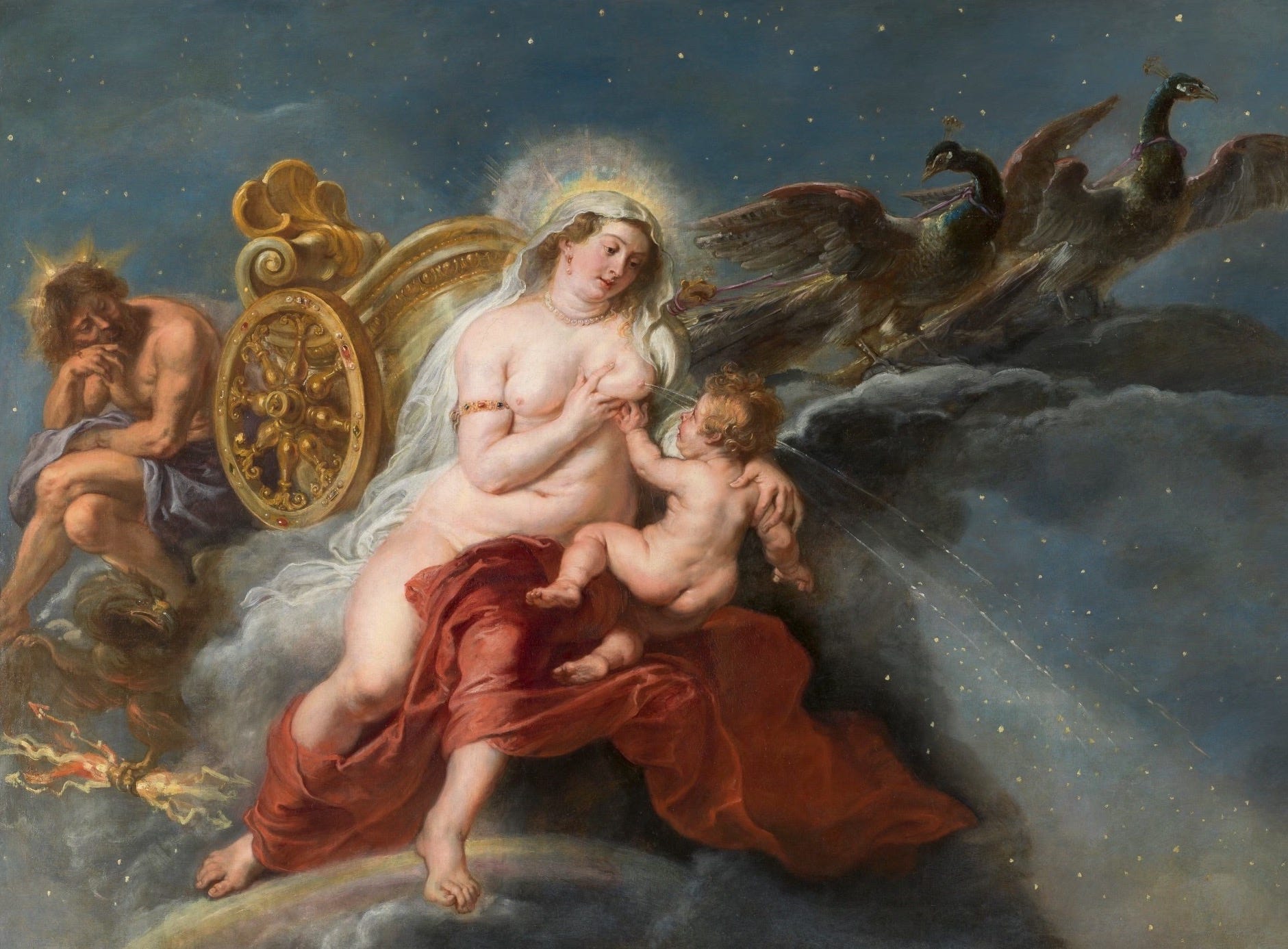
Easier to accept, maybe, is his differentiation between improvisation that produces “vulgar effects” and those that accompany “works with a more disciplined form.” When Rubens has Venus shoot breast milk at Cupid’s face in The Birth of the Milky Way, it occurs to the mind as vulgar for a moment. But then you see the broken arcs of white pigment transforming from lactation into shooting stars at the center of the painting. These dabbed streaks of white forming Venus’s streams of milk are like the yellow strokes depicting electric tatters of cornstalks that float on a series of broad, wet strokes of black and brown in the lower right corner of the Antwerp Adoration of the Magi. These improvisational gestures could have ruined the pictures bearing them. Instead, they give birth to a new apprehension of life.
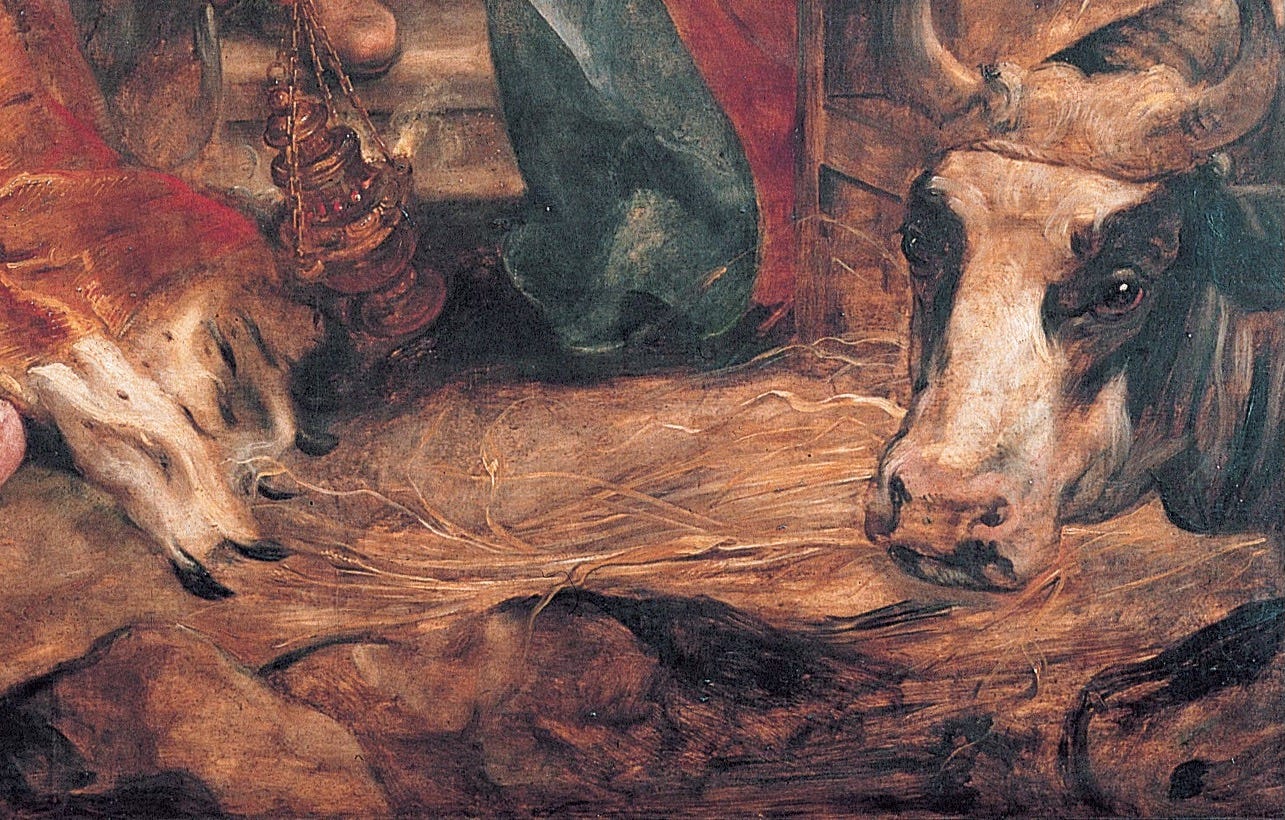
Improvisational gestures are the result of controlled unknowing. Rubens’s gestures were discovered, not executed, and you discover them with him, all because the artist knew when not to impose his learning, his will to human artifice, on the unpremeditated stroke. He recognized and admitted what was not entirely, could never have been, intended.
Improvisation, “if one wants to call it that,” is an opportunity afforded by discipline. Our decadent society is also an anxious one, in which our political modes alternate between provocation and pearl-clutching, both vulgar effects. But I digress. The takeaway is this: Artworks that become the bearers of disciplined improvisation establish their own criteria for all time because they do not obey human standards and intentions. As for Ornette Coleman and Jackson Pollock, time will tell, but the matter is settled for Tintoretto and Rubens: They will make you love flesh like the gods do.
This is not a matter of taste but of the ongoing life of art. Of the life it conveys, which is not the life of the artist but of the unforeseen. The improvisational gesture endures through time and punches through the noise of transmission by whatever means of mechanical reproduction. The improvisational gesture is not disinterested; the stakes are too high for it to be merely disinterested.
Improvisation may be misconceived as inspired or spontaneous action, misunderstood as unconscious release or even sloppy execution. It is, stated correctly, what the artist retreats from and hopes for, the unforeseen that emerges and retreats on its own schedule, though only if the artist and we, too, are ready for it. Prepare yourself.